



Article
Artisan Furniture That Celebrates the Beauty of Imperfection: Handcrafted Indonesian Suar Wood Dining Table with Stunning Natural Edges

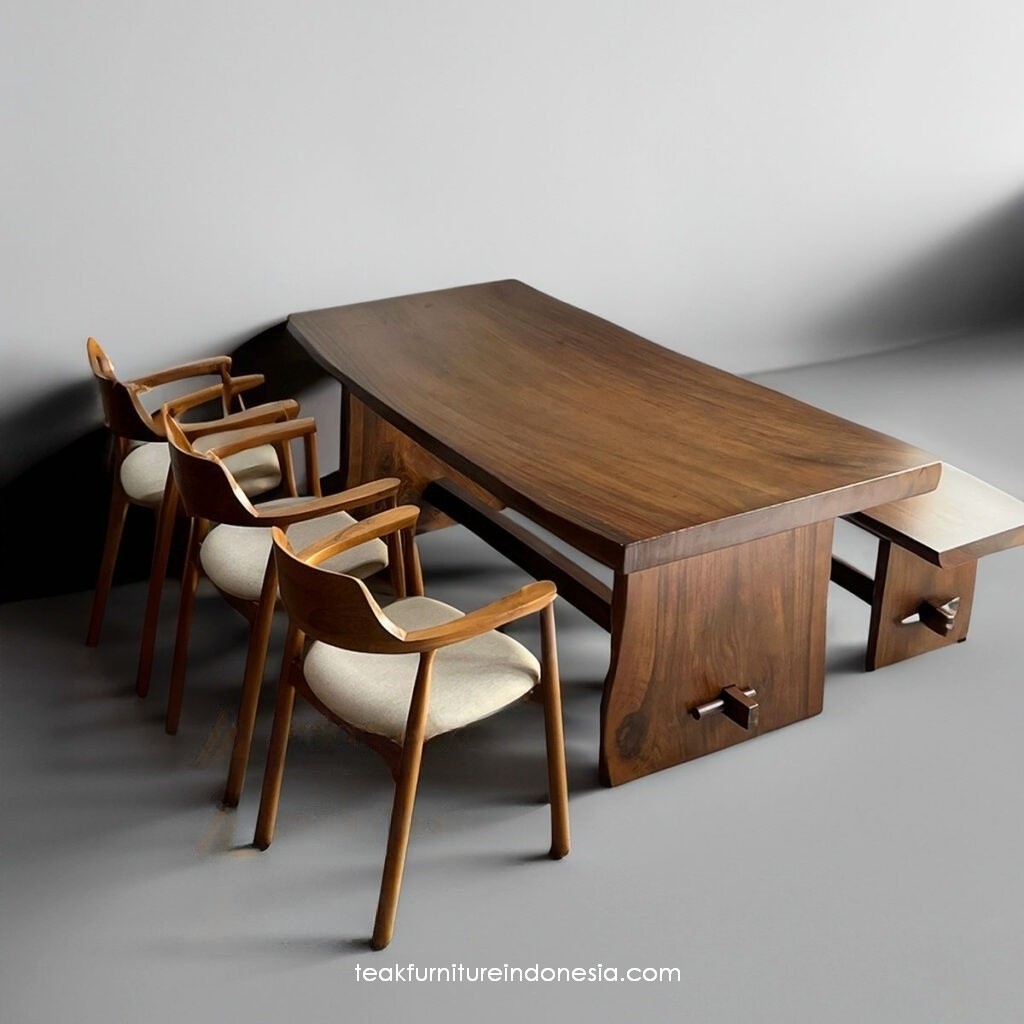
The suar wood dining table is unquestionably a member of the latter category, as there is a significant distinction between furniture that merely occupies a space and furniture that completely transforms it. The extraordinary grain patterns and dramatic natural character of suar wood, which is also known as monkeypod or rain tree wood, have enraptured furniture devotees, interior designers, and collectors worldwide. This wood is native to the tropical regions of Southeast Asia, particularly Indonesia. The wood produced by each suar tree is characterized by its unique, spreading canopy, which produces organic shapes, striking color variations, and expansive curves that are impossible to replicate through any manufacturing process. This exceptional timber becomes the undisputed centerpiece of any room when it is transformed into a dining table, concurrently fostering a warm and inviting connection and commanding attention. The increasing appreciation for suar wood is indicative of a broader cultural shift toward authentic, natural materials that convey genuine character and tell stories, as opposed to the sterile uniformity of mass-produced alternatives.
 The transformation of a towering tropical tree into a breathtaking suar wood dining table necessitates exceptional craftsmanship and patience, which respects the material’s inherent beauty. The awe-inspiring broad blocks that enable single-piece tabletops are made possible by suar trees, which can live for over a century and reach enormous proportions, with trunk diameters occasionally exceeding six feet. Timber undertakes an elaborate curing process that can last for months or even years to achieve the moisture stability required for fine furniture after being harvested from sustainably managed plantations or fallen trees. Master craftsmen, many of whom have been trained in techniques that have been handed down through generations of Indonesian woodworking families, then evaluate the distinctive characteristics of each marble to ascertain the most effective way to highlight its natural features. The live margins of certain pieces are preserved with their original bark, ensuring that they have the greatest organic impact, with minimal intervention. While maintaining the undulating lines that differentiate suar from more homogenous hardwoods, others are meticulously shaped. The finish process necessitates the same level of expertise to produce results that are commensurate with the exceptional raw material, whether it is hand-rubbed oils that improve the natural texture or protective lacquers that increase the depth of the grain.
The complex interplay of colors, patterns, and textures that develop as each tree matures in response to its unique environmental conditions is what makes a suar wood dining table visually magnificent. The heartwood is typically characterized by rich golden-brown to chocolate tones, while the sapwood ranges from milky white to pale yellow. When both are preserved in a single slab, dramatic contrasts are produced. The three-dimensional depth effects that are produced by interlocking grain patterns appear to shift and dance as light moves across the surface throughout the day. Natural characteristics, such as knots, mineral deposits, insect traces, and growth irregularities, are transformed into design elements, which not only add character but also verify authenticity. Stunning resin inlays, frequently found in vivid blues, greens, or clear finishes, are incorporated into numerous contemporary pieces. These inlays not only replace natural cavities and fissures, but also create striking “river” effects that are highly sought after in modern furniture design. No two suar tables are ever identical due to the overwhelming variation; purchasing one guarantees the acquisition of a truly unique piece that is not found anywhere else in the world.
In addition to its aesthetic allure, the suar wood dining table provides practical benefits that substantiate its status as a premium furniture option. Suar wood is characterized by a moderate density that strikes a balance between durability and workability. It is more easily transportable and installable than denser exotic hardwoods, and it is resistant to fractures and blemishes. The interlocking grain structure ensures extraordinary stability, reducing the deformation and splitting that are common in inferior materials when exposed to humidity fluctuations that are common in climate-controlled residences. A suar that has been properly completed necessitates minimal maintenance. The surface can be maintained in a gorgeous condition for decades by applying furniture oil or wax on a regular basis and occasionally wiping. Matte natural oils that accentuate tactile texture and high-gloss lacquers that generate mirror-like reflections are among the numerous finish options that the wood can accommodate, enabling customization to complement a wide range of interior styles. Suar’s intrinsic adaptability allows it to serve as the foundation for nearly any design scheme, from industrial modern to mid-century contemporary to farmhouse rustic. These tables also offer psychological advantages due to their substantial weight and presence. In our world that is becoming increasingly disposable, there is a profound sense of satisfaction in assembling around furniture that is both substantial and enduring.
The cultural significance of assembling around a suar wood dining table is not limited to its mundane functionality; it also encompasses the domain of meaningful human connection and ritual. For millennia, dining tables have been the focal point of family life in various cultures. They are the sites where meals are shared, conversations are conducted, celebrations are held, and relationships are fortified across generations. The selection of a table that has been crafted from a tree that has lived for decades or centuries adds a profound dimension to these experiences, connecting daily rituals to natural cycles and timeframes that extend far beyond our individual lives. The visible history that is imbedded in each grain line, color variation, and conserved natural edge serves as a constant reminder of the living world that exists beyond our boundaries. Many families report that their suar table becomes a cherished gathering point, which encourages more frequent hospitality, deeper conversations, and lengthier meals, as guests genuinely want to experience the piece. Furniture that actively promotes these objectives becomes valuable beyond any price tag as we increasingly acknowledge the significance of slowing down, disconnecting from screens, and cultivating in-person relationships. The suar wood dining table is not solely a surface for positioning dishes; it is an investment in the quality of life in the surrounding area for years and generations to come.